

Your Guide to Traditional Navratri Embellishments: From Mirror Work to Bandhani

27-Aug-26 11:14 AM
House of Indya Editorial Team
The essential embellishments for your Navratri wardrobe are those rooted in Gujarati craft, designed for movement and light. A ghagra choli with mirror work, known as Abhla Bharat, uses tiny mirrors to catch the light as you dance. Equally important is Bandhani, the intricate tie-dye technique that creates a constellation of dots and patterns across the fabric, and the vibrant, rustic threadwork of Kutchi or Gamthi embroidery. These crafts form the visual language of the festival.
What Are the Key Traditional Navratri Embellishments?
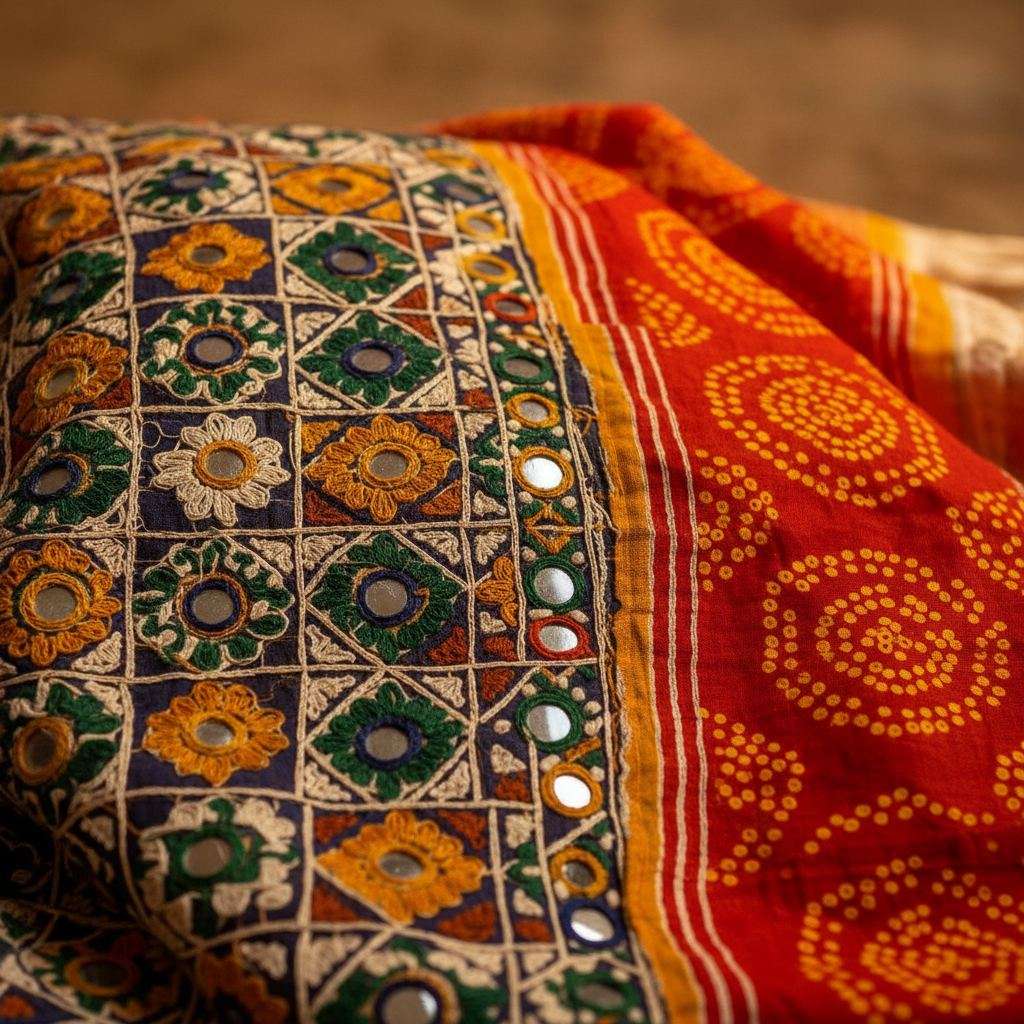
The soul of a Navratri outfit lies in its handcrafted details. The most iconic of these is mirror work, or Abhla Bharat. These small, reflective pieces are not merely stuck on. They are secured to the fabric with a framework of surrounding stitches, usually a cross-stitch or a buttonhole stitch, which holds them firmly in place even through vigorous movement. On a traditional `ghagra choli`, the mirrors are arranged in geometric or floral patterns, creating a surface that comes alive under the lights of a garba hall. Each turn and twirl produces a cascade of fragmented light, making the embellishment an active participant in your dance.
Next, you have the beautiful complexity of Bandhani. This is a highly skilled resist-dyeing technique from Gujarat and Rajasthan where the fabric, often a fine cotton or silk, is pinched and tied into thousands of tiny knots before being dyed. When the threads are untied, they reveal a pattern of small dots in the original fabric colour. These dots form elaborate designs: circles (chakri), squares (chaukidar), or waves (leheriya). A traditional lehenga choli in Bandhani is a testament to patience and artistry, carrying a depth of colour and pattern that printed fabrics cannot replicate.
Beyond these two, you will often find Gamthi and Kutchi embroidery. These are forms of threadwork characterized by their bold, bright colours and rustic, energetic patterns. Gamthi work, meaning "from the village," often features a dense arrangement of running stitches, chain stitches, and geometric motifs that cover large portions of the choli or the border of the ghagra. It provides a rich, textural contrast to the shimmer of mirror work and the fine detail of Bandhani, grounding the garment in a folk tradition. When you choose an outfit with these details, you are wearing a piece of cultural history.
Which Fabrics Work Best for a Long Night of Garba?
Your fabric choice will determine your comfort over a long evening of dance. For nights spent in a crowded hall doing garba or dandiya, breathability is your primary concern. Lightweight fabrics that allow air to circulate and moisture to evaporate are your best allies. Cotton is the classic choice for a reason. It is soft, absorbent, and keeps you cool. Many modern `chaniya choli` designs use cotton-silk blends, which give you the comfort of cotton with the subtle sheen and better drape of silk. Rayon and georgette are also excellent options, as they are light, flow beautifully, and do not trap heat. Among our own overseas customers, georgette is the most popular fabric choice for festive lehengas, making up about 38% of orders, followed closely by silk at around 34.5%.
Heavier fabrics like pure brocade, velvet, or a dense `silk lehenga` have undeniable richness and are perfect for the puja, a family dinner, or a shorter event where you are not dancing for hours. Their weight and structure create a regal silhouette. However, for a high-energy garba that lasts until the early morning, these materials can become restrictive and warm. The sheer weight of a heavily woven silk ghagra can also tire you out.
When you shop online, always expand the "Fabric & Care" section. Look for compositions that list cotton, georgette, or rayon. If you are considering a silk lehenga, check if it is a blend or if it has a cotton lining, which can significantly improve its comfort for a long evening.
Find Your Perfect Navratri Chaniya Choli
Explore authentic designs with traditional mirror work and Bandhani.
How Do You Choose the Right Chaniya Choli Fit for Dancing?
The right fit for a garba outfit is about function just as much as it is about form. Your `chaniya choli` needs to move with you, not against you. Start with the choli, or blouse. It must be secure, fitting snugly around your torso so it does not shift as you move. The critical test is arm movement. You should be able to lift your arms fully above your head for dandiya and clap without the choli riding up uncomfortably. Look for designs with secure back closures, like sturdy hooks or a well-constructed zipper, rather than just simple ties.
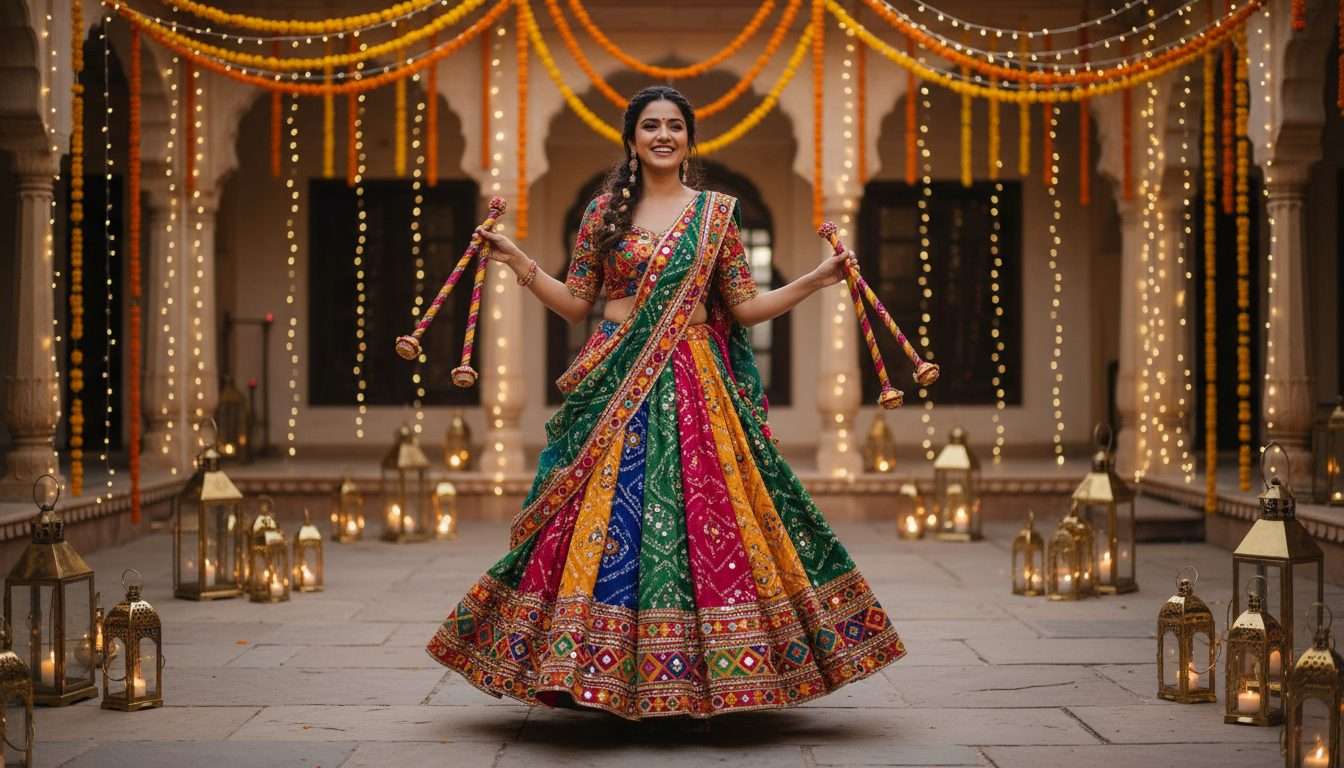
For the ghagra, or skirt, two measurements are key: the waist and the flare. The waistband should sit comfortably and securely at your natural waist or just below, without digging in. It needs to hold the weight of the skirt through hours of spinning. The flare, or ghera, is what gives the `ghagra choli` its dramatic effect. A generous ghera, which can range from 3 meters to over 10 meters in circumference, is what creates that beautiful, circular spread when you twirl. For dancing, the skirt's length should ideally be at your ankle. Any longer and you risk tripping over the hem yourself or it getting stepped on by another dancer.
Before you add any item to your cart, take your measurements with a flexible tape measure. Compare your bust, waist, and hip measurements against the brand's size chart. Do not assume your standard dress size will translate directly. Indian garment sizing can be different, and a few minutes with a tape measure will save you from the disappointment of a poor fit.
How Do You Style Different Embellishments for Navratri?
Styling your Navratri look is about creating balance. If you have chosen a spectacular `ghagra choli with mirror work`, the garment itself is the centerpiece. Let it shine. You can balance its brilliance by pairing it with traditional oxidized silver jewelry, which has a matte finish that complements rather than competes with the sparkle of the mirrors. If the choli is as heavily worked as the skirt, consider a simpler dupatta, or drape it neatly to one side. If the skirt is the main event, a simpler, solid-coloured blouse can create a sophisticated contrast.
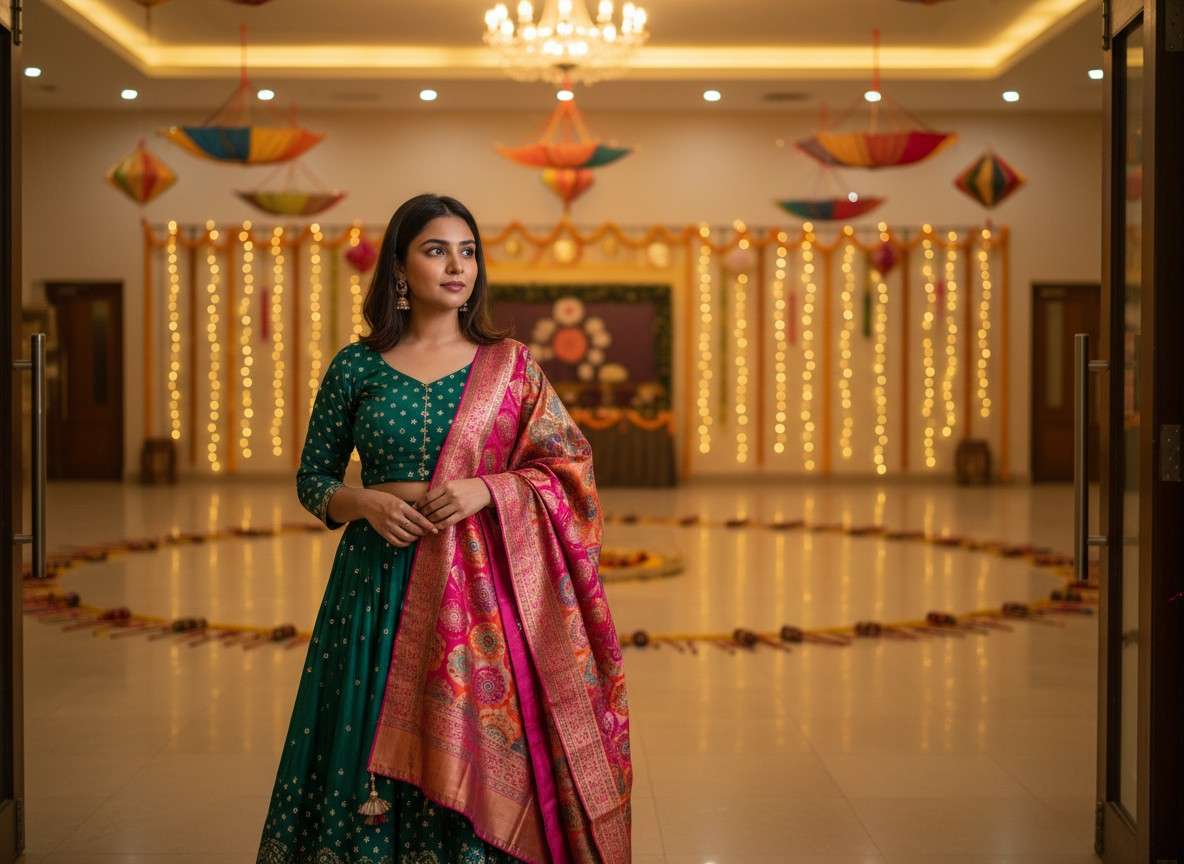
A lehenga choli in traditional Bandhani has a different energy. Its beauty is in its intricate, all-over pattern. This pairs wonderfully with chunky, tribal-inspired silver jewelry or even colourful thread and pom-pom accessories for a more bohemian look. To break up the pattern, you could style a plain cotton lehenga with a vibrant Bandhani dupatta, letting the drape be the focus. The versatility of this craft is one of its greatest strengths.
Do not be afraid to choose a base colour that acts as a canvas. A stunning black lehenga can be incredibly dramatic for Navratri, especially when styled with a brightly coloured dupatta in Rani pink, emerald green, or royal blue. Interestingly, while red is often seen as the quintessential festive colour, our own order data shows it ranks ninth for chaniya cholis among our overseas customers. The top spot is taken by multi-coloured designs, which account for about 19.2% of orders, followed by blue and green.
What Common Mistakes Should You Avoid When Buying a Navratri Outfit Online?
Shopping for a `gujarati lehenga` online from thousands of miles away can feel like a gamble, but you can avoid the most common pitfalls with a little preparation. The single biggest mistake is ignoring the size chart and ordering your usual size. Garment specifications vary widely between brands, so measuring yourself and checking the chart is not optional, it is essential.
Another frequent error is falling for a beautiful design without checking the fabric composition. A heavy synthetic fabric might look great in a photo, but it will feel suffocating after ten minutes of garba. Always read the product details to ensure you are getting a breathable material like cotton, georgette, or a comfortable blend. Also, pay close attention to the product description to see if the choli is stitched, semi-stitched, or comes as unstitched fabric. Assuming it is ready-to-wear when it is not can lead to a last-minute scramble for a tailor.
Finally, do not wait until the last minute. The anxiety of watching a tracking number while the festival dates loom is something you can easily avoid. Ordering your outfit well in advance gives you a buffer for shipping and allows you time for any minor alterations you might need. A beautiful outfit is meant to be enjoyed, not worried about.
What Should You Know When Ordering a Navratri Outfit From Abroad?
When you are ordering from the US, UK, Canada, or Australia for Navratri, a few extra considerations will ensure a smooth experience. First and foremost, check the brand's international shipping policies and estimated timelines. For context, Sharad Navratri 2026 begins on October 11th. If you are ordering a custom-stitched piece, you should place your order at least three to four weeks before you need it to allow for both tailoring and transit time.
Familiarize yourself with the return and exchange policy for international customers before you buy. Understand the process, timeframe, and who covers the shipping costs for returns. This information is usually available in a dedicated section on the website or in the FAQ. Knowing this upfront helps you make an informed decision.
Lastly, be aware of potential customs duties and import taxes. These fees are determined by the laws of your destination country and are not included in the price you pay at checkout. In most cases, the customer is responsible for paying any applicable duties to the courier upon delivery. This can be an unexpected expense if you are not prepared for it, so it is wise to be aware of the possibility. Ordering your chaniya choli with these points in mind will help ensure it arrives on time and ready for the celebration.
= Will it look like the photograph? Rated 4.0★ across 13,193 customer reviews on the pieces featured here
= Will it fit when I cannot try it on? Every product page carries garment measurements, not just size labels
= Do they actually ship to me? Ships to the US, UK, Canada, Australia with tracked delivery
= What if it is wrong? Returns and exchanges handled by a team you can reach directly
Frequently asked questions
what is the difference between lehenga and chaniya choli?
A Chaniya Choli is the traditional Gujarati name for what many call a Lehenga or Ghagra Choli. While the terms are often used interchangeably today, a chaniya choli traditionally implies specific regional crafts like mirror work or Kutchi embroidery, designed for festivals like Navratri. The core three-piece construction of skirt, blouse, and dupatta remains the same across all terms.
what is the dress code for navratri?
The traditional dress for Navratri garba is the Chaniya Choli. You may have heard of the nine colours of Navratri, where a specific colour is worn each night. While many enjoy following this custom, it is a joyful guideline, not a strict rule. The most important thing is to wear something that feels festive and allows you to dance comfortably and celebrate with community.
how to choose garba dress?
For a garba dress, prioritize function for a long night of dancing. Choose a breathable fabric like cotton, georgette, or a lightweight silk to stay cool. Ensure your choli is well-fitted and secure, allowing you to lift your arms freely. Look for a chaniya with a generous flare, or ghera, for beautiful twirls, but make sure the length is at your ankle to avoid tripping.
Ready for the Nine Nights?
Your Navratri wardrobe starts here. Discover our collection of chaniya cholis, crafted with authentic embellishments and designed for the dance floor, with fits you can trust.
 @indya
Related Posts