

The Kanjivaram & Beyond: Your Guide to Traditional Silk Sarees for Diwali

17-Sep-26 11:27 AM
House of Indya Editorial Team
|
For the main Lakshmi Puja, a Kanjivaram silk saree is the definitive choice, its weight and lustre matching the occasion's grandeur. For the surrounding festivities, however, your options open up beautifully to other regional weaves like Banarasi or Mysore silk, each offering a distinct character. When you buy a silk saree from abroad, you want assurance it will arrive on time and fit as described. This is why so many of our customers in the USA, UK, Canada, and Australia trust House of Indya for their festive wear; every piece has detailed garment measurements listed, so you can buy with confidence.
 |
Which Traditional Silk Saree Should You Choose for Diwali?
For a grand Diwali celebration, particularly the evening Lakshmi Puja, a Kanjivaram saree is an unparalleled choice. Its opulence, derived from heavy mulberry silk and pure zari work, has a regal presence that feels right for the most significant event of the year. Originating from Kanchipuram in Tamil Nadu, this saree is a masterpiece of textile art, often featuring motifs inspired by temple architecture, flora, and fauna. A pure silk saree is an heirloom, a piece you will treasure and wear for years, making the investment worthwhile.
Of course, the world of Indian textiles offers a rich tapestry of choices. For a different kind of splendour, a Banarasi silk saree from Varanasi is a magnificent alternative. Known for its intricate brocade work, often with Mughal-inspired floral and foliate motifs called *kalga* and *bel*, a Banarasi has a slightly softer drape than a Kanjivaram but is no less majestic. Another beautiful option is the Mysore silk saree, which is celebrated for its minimalist aesthetic, lustrous finish, and single-tone body, usually accented with a simple yet elegant gold zari border. Then there is the Paithani from Maharashtra, identifiable by its peacock motifs on the pallu, woven in a tapestry-like style. Exploring the different weaves at House of Indya can help you match the saree's personality to the specific event's tone.
How Can You Tell if a Kanjivaram Saree is Authentic?
The first and simplest check is to look for the Silk Mark certification label. This is a government-backed assurance that the fabric is pure silk, giving you a baseline of confidence in your purchase. This is particularly helpful when you're shopping online and can't physically touch the garment. At Indya, we try to build that trust by showing real, unedited reviews from other shoppers on each product page, so you get a genuine sense of the fabric and finish before you buy.
 |
Next, examine the zari. In a genuine Kanjivaram, the zari thread is a strand of red silk twisted with a fine silver wire and then dipped in gold. A common test, if you are willing to sacrifice a tiny thread from the saree's edge, is to burn it. Real zari will not burn away but will leave a ball of ash that smells like burnt hair, revealing the blackened silver and gold. A simpler, less destructive method is to gently scratch the zari; on an authentic piece, the underlying red silk thread may become visible, whereas a fake will often reveal a white synthetic thread or a plain metallic wire.
Finally, consider the construction. A true handloom Kanjivaram silk sarees is heavy, with a distinct stiffness that softens over time. You can also look for the *korvai* technique, a hallmark of an authentic Kanjivaram. This is where the body and the border of the saree are woven separately and then joined together in an interlocking weave. If you look at the point where the border meets the body, you will often find a slightly raised, distinct line, a testament to this intricate weaving method.
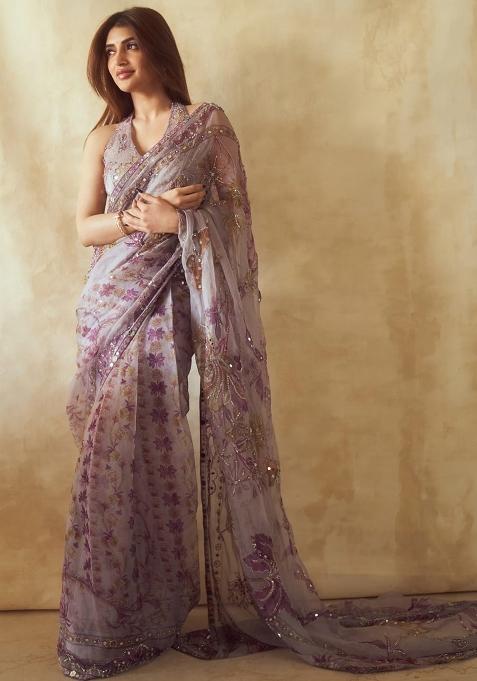
Find Your Perfect Diwali Saree, Delivered Worldwide
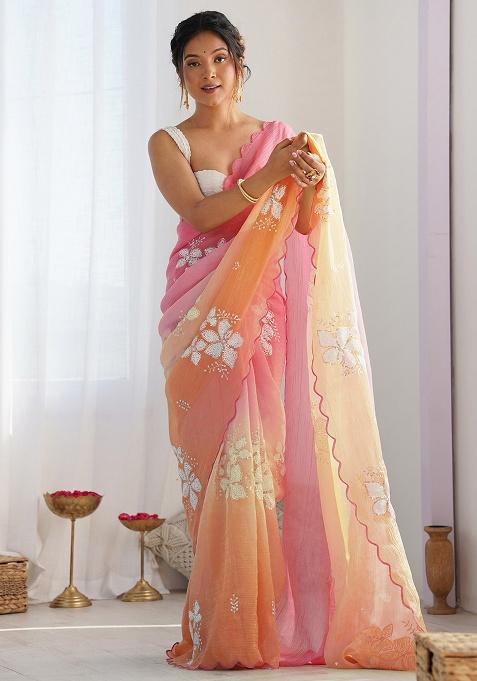
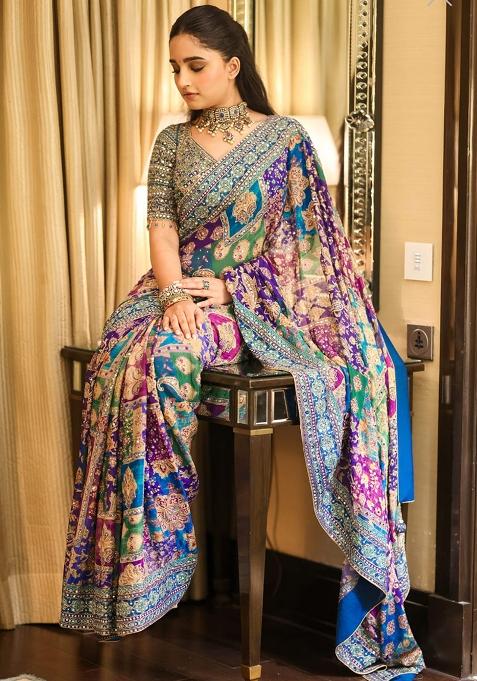
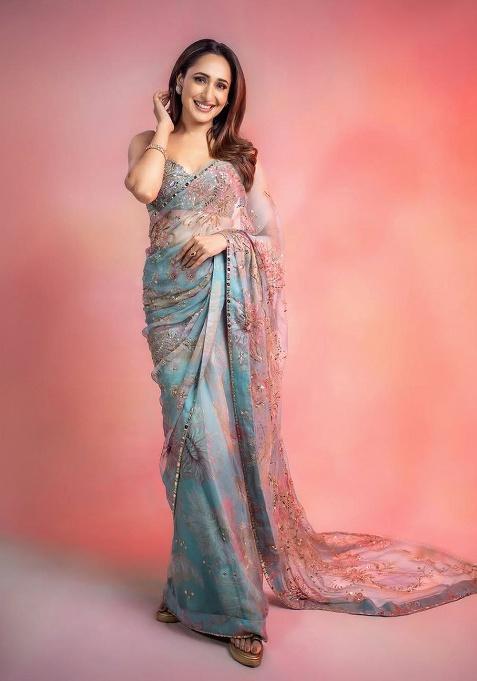
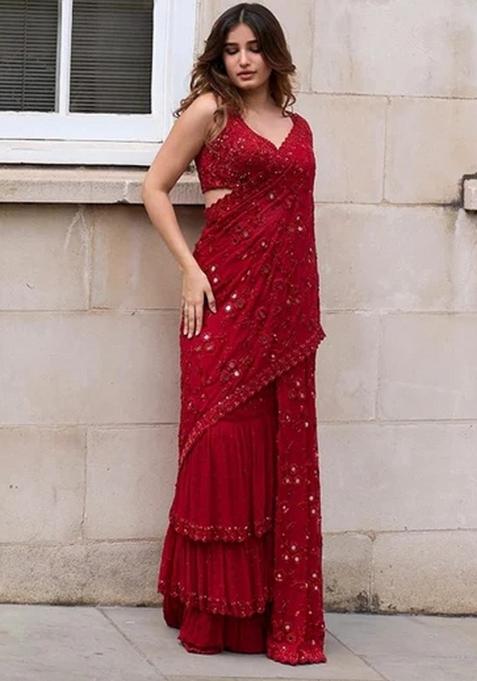
From classic silks to modern pre-draped styles, find your fit.
|
|
|
|
|
| Explore Saree Collection |
Which Draping Styles Work Best for a Silk Saree?
The classic Nivi drape is a widely chosen and elegant style for showcasing a heavy silk saree’s assets. With the pleats neatly tucked at the front and the pallu draped gracefully over the left shoulder, this style allows the border and the elaborate pallu to be displayed beautifully. The key to a good Nivi drape with a stiff silk like a Kanjivaram is to make your pleats as sharp and even as possible. This ensures the saree falls correctly and moves with you, rather than bunching up.
For a more traditional or ceremonial look, especially in some South Indian families, the nine-yard Madisar drape is a powerful choice, though it requires more practice to perfect. An alternative that beautifully showcases an elaborate pallu is the Bengali style drape, where the pallu is brought from the back to the front over the left shoulder, and then brought forward again over the right. Many of the sarees at House of Indya are versatile enough to be styled in any of these ways.
How Should You Accessorise a Traditional Silk Saree?
The classic pairing for a Kanjivaram saree is temple jewellery. These pieces, often crafted in gold or gold-plated silver, feature intricate motifs of deities, peacocks, and temple architecture that echo the designs on the saree itself. A layered look with a choker, a longer *haram*, and matching *jhumkas* creates a regal effect that is perfectly suited to the grandeur of the saree. A *vaddanam*, or waist belt, can also be a stunning addition, helping to cinch the saree at the waist and accentuate your silhouette.
 |
Your blouse is not an afterthought; it is a critical component of the entire look. A well-fitted blouse in a contrasting silk fabric can make the colours of your saree pop. Alternatively, a blouse made from the same silk as the saree, perhaps with embellished sleeves or a decorative back, offers a more seamless and traditional feel. Exploring different silk saree blouse designs can completely transform the feel of the saree, allowing you to re-wear an old favourite with a fresh perspective.
Complete the look with the right finishing touches. For footwear, a pair of elegant heels will help with the saree's drape and fall, while traditional *juttis* can be a more comfortable option for longer events. Carry a small *potli* bag or an embellished clutch that complements the colours of your saree. For your hair, a neat bun adorned with a string of fresh jasmine flowers, or *gajra*, is a timeless and fragrant choice. A long, elegant braid also works beautifully, especially if you have decorative clips or hair accessories to weave in.
Which Silk Saree Works for Each Diwali Event?
The five days of Diwali offer multiple opportunities to dress up, each with its own mood. For Dhanteras, when you might be performing a small puja at home, a lighter silk saree is appropriate. Consider a lovely Mysore silk or a simple Chanderi silk in an auspicious colour like green or yellow. These are elegant and festive without being overly heavy, making them comfortable for an evening at home.
For the main event, the Lakshmi Puja on Diwali night, bring out your most spectacular piece. This is the time for that resplendent Kanjivaram silk saree or a rich, opulent Banarasi brocade. Traditional colours like red, green, and gold are always a wonderful choice. While tradition often points to red, it's fascinating to see what our House of Indya customers celebrating overseas actually choose. Looking at our own order data from the US, UK, and Canada, the saree colours people order most are actually blue, followed closely by green and purple.,, Red, a classic, ranks sixth. This shows you should always feel empowered to choose a colour that you love and feel beautiful in.
For a lively Diwali party or the family-oriented celebration of Bhai Dooj, you might want something that allows for more movement., A lighter weave of soft silk saree in a contemporary colour, or even a silk-blend that drapes easily, would be perfect. This is also where you could experiment with different silhouettes. The most important thing is to feel comfortable and happy as you celebrate with your loved ones. Planning your outfits in advance is the best way to ensure a joyful and stress-free festive season, and it's why House of Indya is so loved by NRIs: our tracked, express delivery means you are never left guessing when your Diwali outfit will arrive.
| Will it look like the photograph? | Rated 4.0★ across 12,363 customer reviews on the pieces featured here |
| Will it fit when I cannot try it on? | Every product page carries garment measurements, not just size labels |
| Do they actually ship to me? | Ships to the US, UK, Canada, Australia with tracked delivery |
| What if it is wrong? | Returns and exchanges handled by a team you can reach directly |
Frequently asked questions
What is the difference between Kanjivaram and Banarasi silk?A Kanjivaram, from South India, uses a 'korvai' interlocking weave, creating a stiffer drape with temple-inspired motifs. A Banarasi, from North India, is known for its softer drape and fine brocade work featuring Mughal-inspired florals. While both use pure silk and zari, their construction and design language are distinct regional signatures. |
How to store a pure silk saree?To preserve your pure silk saree, wrap it in a breathable muslin or cotton cloth, never plastic, which traps moisture. Fold it neatly, turning the zari side inwards to prevent snagging. To avoid permanent creases and protect the zari, refold your saree differently every few months and store it flat rather than on a hanger. |
Can I wear a silk saree for an office Diwali party?Yes, a silk saree is perfectly appropriate for an office Diwali party. Opt for lighter silks like Chanderi or a soft silk with a simple border instead of a heavy Kanjivaram. Choose a polished drape and pair it with minimal, elegant jewellery to maintain a professional yet festive appearance that is comfortable for a work environment. |
What blouse design goes with Kanjivaram saree?Classic silk saree blouse designs for a Kanjivaram include high-necked styles or those with elbow-length sleeves, which complement its traditional feel. For a modern touch, consider a boat neck or a contrasting brocade blouse in a jewel tone. The key is to balance the grandeur of the saree, allowing either the blouse or the saree to be the statement piece. |
Ready for the Festival of Lights?House of Indya is trusted by customers across the USA, UK, Canada, and Australia for festive wear that fits. With detailed garment measurements and dedicated support, you can shop with confidence for your Diwali celebrations.
|
 @indya
Related Posts