

How to DIY a Stunning Garba Outfit From a Saree for Navratri 2026

07-Sep-26 12:30 PM
House of Indya Editorial Team
You can absolutely create a beautiful garba outfit from a saree. The process involves carefully cutting your saree into tapered panels, or kalis, to stitch into a flared skirt, and then using the decorative pallu to construct a matching choli and dupatta. The key is to choose a saree with enough length, about 5.5 meters, and a fabric that is light enough for hours of dancing. With a clear plan, you can transform a beloved but unworn saree into a unique chaniya choli for the festivities. For many of our customers in the US, UK, Canada, and Australia, finding a perfect fit online is the biggest challenge, which is why brands like House of Indya that publish detailed garment measurements for every piece have become a trusted starting point for festive shopping.
How Do You Choose the Right Saree for a DIY Garba Outfit?
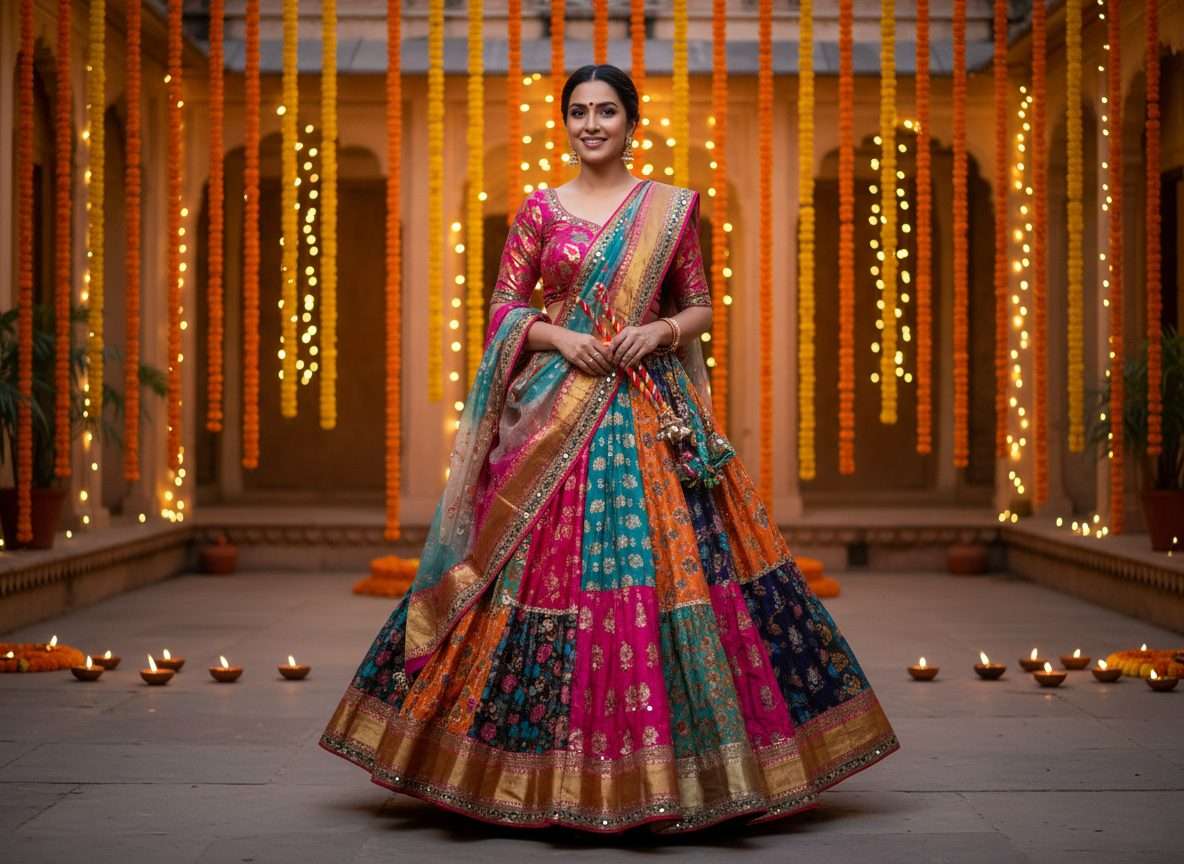
Your first step is selecting the right canvas. For a Garba outfit, the fabric’s weight and breathability are your most important considerations. You will be dancing for hours, so fabrics like cotton, lightweight silks, georgette, or rayon are excellent choices because they allow your skin to breathe and will not weigh you down. While a heavy Banarasi silk saree has an undeniable richness, its weight is better suited for the choli or for creating borders on a lighter skirt. A full skirt made from a heavy Banarasi saree or a traditional Paithani saree can become cumbersome and hot during an energetic dance.
Before you make the first cut, inspect the saree thoroughly. Older sarees, especially pure silks, can become brittle and may tear under the stress of stitching or dancing. Hold the fabric up to the light to check for weak spots or pinholes. You also need to ensure you have enough material. A standard saree of 5.5 meters provides just enough fabric for a flared skirt and a simple choli. The most ornate part of the saree, the pallu, is perfect for the saree blouse or the dupatta, as this ensures the most beautiful weave is front and centre. The border can be detached and reapplied to the skirt's hem or the dupatta's edges for a cohesive finish.
With Sharad Navratri 2026 beginning on Sunday, October 11, you have plenty of time to find the perfect saree to upcycle. It's worth noting that sources disagree on the nine-day colour sequence for 2026. One sequence suggests starting with Orange, while another begins with Yellow. This gives you wonderful creative freedom. If you have a beautiful green or purple saree, for instance, you can confidently create a green lehenga or a purple lehenga that will align with one of the festival days. Browsing the colour-coded collections at Indya can also give you great inspiration for which shades to focus on.
What Materials Do You Need to Create a Garba Dress from a Saree?
Once you have chosen your saree, gathering the right tools is the next crucial step. A well-prepared workspace makes the entire process smoother and more enjoyable. You will need a basic sewing kit, but a few specific items are essential for transforming a flat piece of fabric into a structured garment.
Here is your checklist of materials:
= Your chosen saree: The star of the show.
= Lining fabric: Cotton voile or a similar lightweight cotton is ideal. You will need about three to four meters, depending on the flare of your skirt. The lining adds structure, prevents the skirt from being see-through, and makes it more comfortable against your skin.
= A sewing machine: While some parts can be hand-stitched, a machine will give you stronger, more durable seams for a garment meant for dancing.
= Fabric scissors and pinking shears: Sharp fabric scissors are non-negotiable for clean cuts. Pinking shears create a zigzag edge that helps prevent delicate fabrics from fraying.
= Measuring tape, tailor’s chalk, and pins: For accurate measurements and marking.
= Matching thread: Choose a high-quality thread that matches the main colour of your saree.
= A zipper and hook-and-eye closures: For the skirt’s side fastening.
= Optional embellishments: Tassels (latkans), extra borders, or mirror-work trims if you wish to add more flair.
= Optional can-can (cancan) netting: If you desire a very full, dramatic flare, you can add a layer of stiff netting between the lining and the main fabric.
If you decide the saree’s fabric is too delicate for the choli or if there isn’t enough left over, you will need about one meter of a complementary fabric for the blouse. A raw silk or a simple cotton in a contrasting or matching colour works beautifully. The ready-to-wear blouses at House of Indya can also serve as a useful reference for necklines and sleeve styles that are currently popular.
Find Your Perfect Navratri Chaniya Choli
Explore our collection of dance-ready styles, delivered worldwide.
How Do You Make a Chaniya Choli from a Saree, Step by Step?
This is where your vision starts to take shape. Creating the skirt, or chaniya, involves cutting the saree into panels, known as kalis, which give the skirt its signature flare. It requires precision, so work slowly and measure twice before every cut.
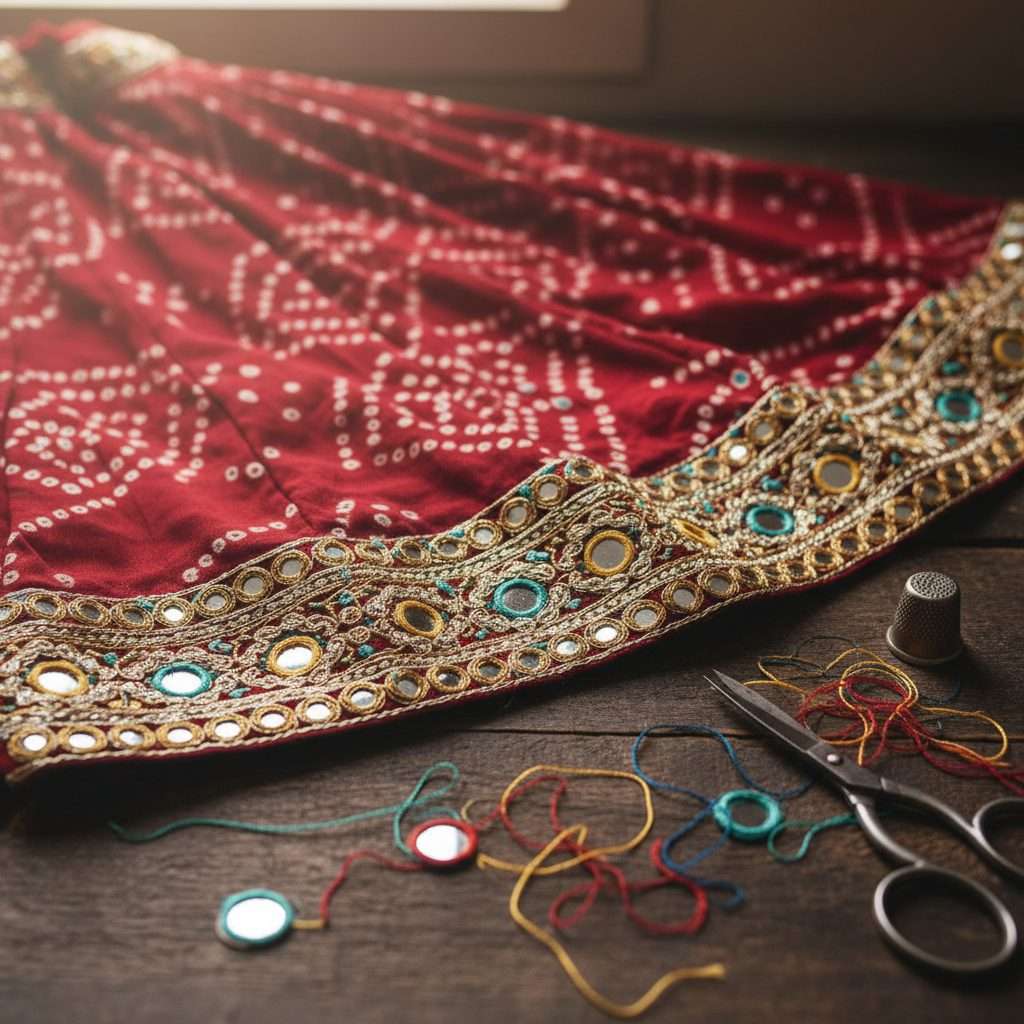
Here is a step-by-step guide to making the skirt:
1. Take Your Measurements: You need two primary measurements: your waist circumference and the desired length of the skirt, from your waist to your ankles. Add about two inches to the length for the waistband and hem.
2. Plan and Cut the Panels (Kalis): This is the most mathematical part. A typical Garba skirt uses 14 or 16 panels. To calculate the width of each panel, divide your waist measurement by the number of panels (e.g., 32-inch waist / 16 panels = 2 inches). Add one inch for seam allowance, making the top width of each panel 3 inches. The bottom width determines the flare; 8 to 10 inches per panel is a good starting point. Now, fold your saree lengthwise and use tailor’s chalk to draw your tapered panels, alternating the wide and narrow ends to minimize fabric waste. Carefully cut them out.
3. Stitch the Panels: Pin two panels together along one long edge, right sides facing, and sew a straight stitch. Press the seam open. Continue adding panels one by one until you have a large circular piece of fabric. Leave the final seam open for now.
4. Prepare and Attach the Lining: Using the same panel pattern, cut your lining fabric. Stitch the lining panels together, just as you did with the saree fabric. Place the lining inside the skirt, wrong sides together, and baste them together at the waist.
5. Create and Attach the Waistband: Cut a strip of fabric about 4-5 inches wide and two inches longer than your waist measurement. Fold it in half lengthwise and press. Stitch it to the raw edge of the skirt's waist, right sides together.
6. Insert the Zipper: Sew the final side seam of your skirt and lining, leaving a 7-inch opening at the top. Insert your zipper into this opening. Fold the waistband over to the inside, tucking in the raw edges, and stitch it down neatly. Add a hook-and-eye closure at the top of the waistband for a secure fit.
For the choli and dupatta, use the remaining saree fabric, especially the pallu. You can use a pre-existing blouse as a pattern to cut the fabric for a new saree blouse. The leftover fabric, especially if it includes a border, makes a perfect matching dupatta. Many of the lehenga sets from Indya feature these thoughtful details, like using a motif from the skirt on the choli sleeve, which is a great technique to borrow.
What Are the Most Common Mistakes When Upcycling a Saree?
Upcycling a saree is a rewarding project, but a few common missteps can lead to disappointment. Knowing what to watch out for will help you achieve a professional-looking result.
The most frequent error is inaccurate measurement. A skirt that is too tight at the waist or too short in length is difficult to fix once the fabric is cut. Always double-check your numbers and remember to account for seam allowances and hems. Another significant mistake is choosing a fabric that is not suited for the project’s end use. A very delicate silk saree might not withstand the strain of dancing, and a heavy, non-breathable one will be uncomfortable.
Failing to use a proper lining is another pitfall. A lining does more than just make a garment opaque; it gives the skirt body and structure, allowing it to hang and move correctly. Without it, your chaniya will look limp and lifeless. This is why so many shoppers trust House of Indya for their festive wear; our clear product descriptions and large base of genuine customer reviews mean you know exactly what you are getting, from fabric type to lining details, before you buy. Similarly, not planning your cuts is a critical error. Before you cut, lay the entire saree out and decide which parts will become the skirt, the choli, and the dupatta. This ensures you do not accidentally slice through the beautiful pallu or an intricate border that you intended to use elsewhere.
Finally, always pre-wash your fabrics, especially if you are using a cotton saree and a cotton lining. If you skip this step, the outer fabric and lining could shrink at different rates after the first wash, causing the seams to pucker and ruining the garment’s drape.
How Do You Adapt This for Dancing Outside India?
Celebrating Navratri from the US, UK, Canada, or Australia comes with its own context. Garba events are often held in large, hired community halls or hotel ballrooms that can get quite warm after a few hours of dancing. Your outfit needs to be built for comfort and endurance. This is where your fabric choice becomes paramount. A DIY ghagra choli from a lightweight georgette or cotton blend will serve you far better than a heavily embroidered velvet piece.
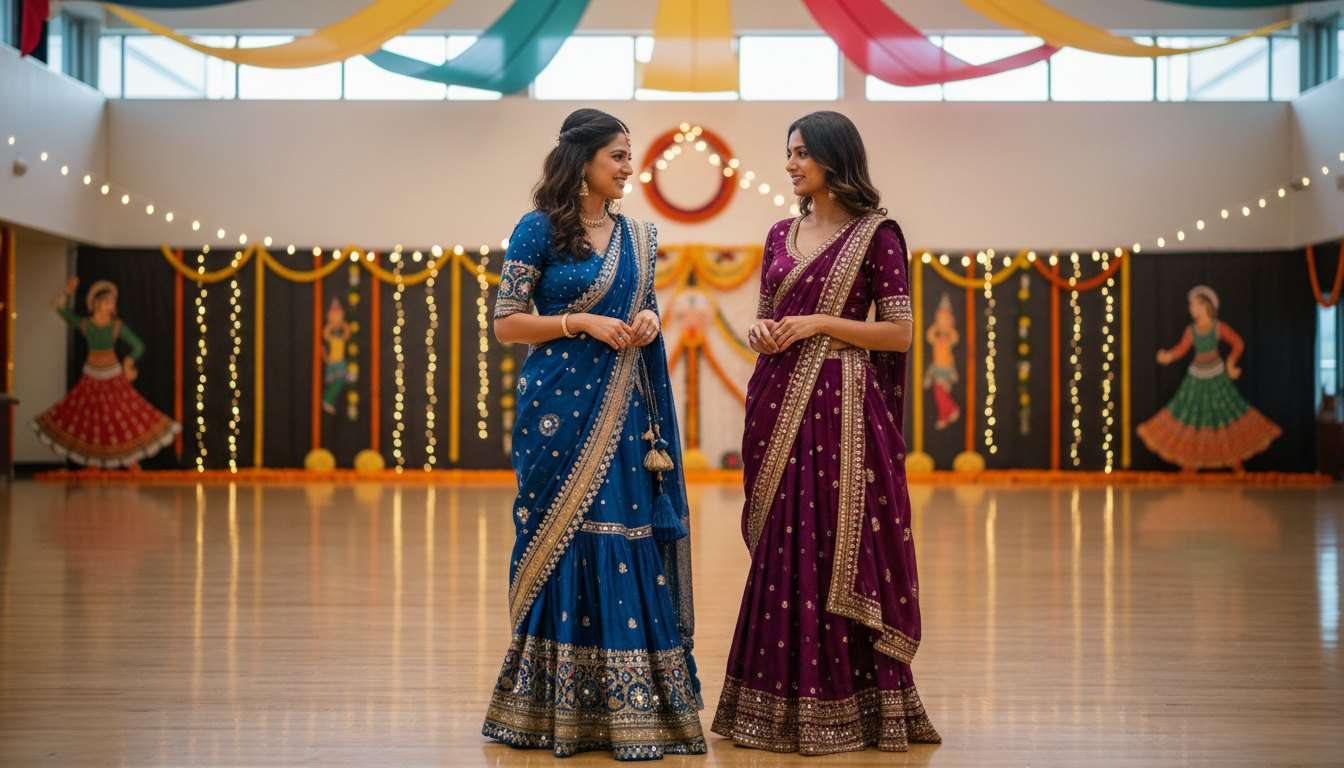
This is something we see reflected in what our own customers choose. Looking at overseas orders at House of Indya , georgette is a leading choice for chaniya cholis, followed by silk blends, because they offer a beautiful fall without the weight. Interestingly, while red is a festive classic, our data shows that for chaniya choli, multi-coloured designs are the top choice for our shoppers abroad, followed by blue and green. This is why Indya has become one of the most loved destinations for NRI festive shopping; the range anticipates these preferences and tracked shipping to these markets means you get your outfit well before your event date.
Another practical adaptation is to think of your DIY outfit as a set of separates. A well-made skirt can be paired with other blouses from your wardrobe, and the choli can be worn with different sarees or skirts for other occasions. This versatility is invaluable when you have multiple events to attend.
If the idea of a full DIY project feels too ambitious with your schedule, you can still get a custom feel. Consider a half saree lehenga or one of the elegant pre-draped sarees from our collection at House of Indya . These give you the grace of a saree with the ease of a lehenga, a perfect compromise that saves you time without sacrificing style. Whether you choose to make your own or find your perfect fit with us, planning ahead is the best way to ensure you feel brilliant on the dance floor this Navratri.
= Will it fit when I cannot try it on? Every product page carries garment measurements, not just size labels
= Do they actually ship to me? Ships to the US, UK, Canada, Australia with tracked delivery
= What if it is wrong? Returns and exchanges handled by a team you can reach directly
Frequently asked questions
can i make lehenga from old saree
Yes, you can make a beautiful lehenga from an old saree. Before starting, inspect the fabric for weak spots, as older materials can be fragile. A standard 5.5-meter saree is usually long enough for a flared skirt. For a Garba outfit, choose a lighter fabric like cotton or georgette to ensure you can dance comfortably for hours.
how many meters of cloth is required for chaniya choli
A standard 5.5-meter saree is typically sufficient to create the chaniya, or skirt. This length allows for a good amount of flare for dancing. The choli, or blouse, can often be made from the saree’s decorative pallu. If the pallu is not large enough, you will need about one meter of a complementary fabric for the blouse.
which fabric is best for garba chaniya choli
The best fabrics for a Garba chaniya choli are lightweight and breathable materials like cotton, georgette, and rayon. These fabrics offer a beautiful drape and ensure you stay comfortable while dancing. While heavier silks like Banarasi are beautiful, they are better used for the choli or as decorative borders, as a full skirt made from them can feel too heavy.
Your Navratri Wardrobe, Sorted.
Whether you are creating your own outfit or looking for a ready-to-wear piece, House of Indya is a name trusted by shoppers in the USA, UK, Canada, and Australia for festive wear that fits. Our detailed size charts and reliable delivery mean you can focus on the celebrations.
 @indya
Related Posts